High Water Bill from JEA
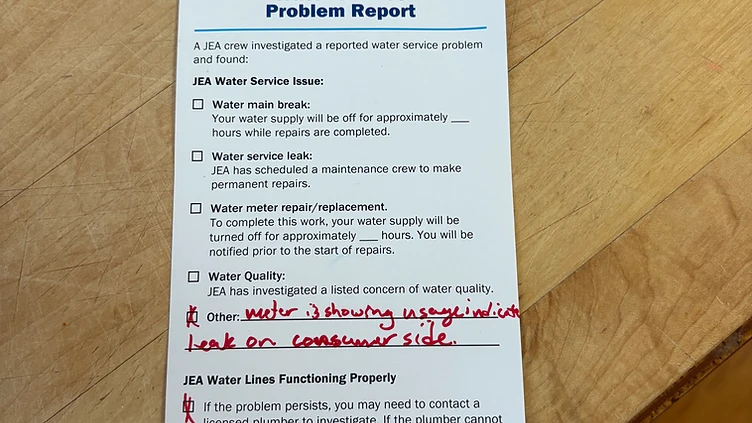
If you recently received a notification from JEA (Jacksonville Electric Authority) telling you that your home has experienced unusually high-water consumption, don't ignore it.
A high-water usage notification doesn't necessarily mean you have a major leak—but it is a reason to investigate.
JEA monitors water consumption and can notify customers when it detects a consistent and significant increase in water usage. JEA says continuous water flow over an extended period can be a sign of an undetected leak.
The sooner you determine what is causing the increased consumption, the better.
What Does a JEA High Water Usage Alert Mean?
JEA's advanced water-metering system allows the utility to monitor water consumption more closely and identify unusual usage patterns.
A notification may mean that your home is using significantly more water than it normally does, or that water appears to be flowing continuously for an extended period.
There are several possible causes, including:
A running or leaking toilet
A dripping faucet
A leaking water heater or plumbing fixture
A leaking irrigation system
A broken sprinkler head
A leaking outdoor hose bib
A damaged underground water line
A slab leak
A pool or spa leak
A concealed plumbing leak inside the home
JEA specifically identifies toilets, irrigation systems, outdoor spigots and pipes, pools, and water features among potential sources of unexplained water consumption.
Don't Assume the Leak Is Where You Can See Water
One of the biggest misconceptions homeowners have is that a plumbing leak will always leave visible water.
That's not necessarily the case.
A leak can occur underground, beneath a concrete slab, inside a wall, beneath landscaping, or somewhere in the plumbing system where there is no obvious sign of water.
For example, a very small underground leak may not create a visible wet spot in your yard. A slab leak may not immediately produce standing water inside the home. And a pool leak may simply appear as the need to add water more frequently than normal.
That's why a high-water notification can be valuable—it may alert you to a problem before you can physically see it.
What Should You Do If You Receive a High-Water Usage Alert?
- Look at your JEA water consumption
Start by reviewing your recent water usage through your JEA account.
Look for a noticeable change from your normal consumption pattern.
JEA provides customers with tools to review usage trends and daily consumption, which can help identify when the increase began.
- Check the obvious sources first
Before scheduling a professional leak detection, check the easy-to-identify possibilities.
Look at:
Toilets
Faucets
Showers
Irrigation
Pool equipment
Outdoor hose bibs
Water softeners or treatment equipment
Appliances that use water
A toilet that is continuously running can waste a surprising amount of water without producing an obvious puddle.
- Check your water meter
JEA recommends checking the water meter when you suspect a leak.
Turn off all water inside and outside the home and make sure water-using appliances aren't operating. Then observe the meter.
If the meter continues registering water usage when everything is turned off, that can be an indication that water is being used somewhere in the system.
- If you can't find the source, don't keep guessing
This is where professional leak detection can make a difference.
If you've checked the toilets, faucets, irrigation system and other obvious sources and the meter is still showing unexplained water consumption, there may be a concealed leak.
That's when it makes sense to have the plumbing or pool system professionally evaluated.
How ID The Leak Can Help
At ID The Leak, our job is to help determine where the water is going and where the leak is located.
Depending on the situation, we can use specialized leak-detection techniques and equipment to investigate hard-to-find leaks.
These may include:
Acoustic listening equipment
Electronic leak detection
Meter monitoring
Plumbing-system isolation
Specialized listening techniques for underground plumbing
The appropriate testing method depends on the property and the symptoms.
For example, if the JEA meter indicates ongoing water consumption but there is no obvious indoor plumbing leak, we may isolate portions of the plumbing system to determine whether the water loss is associated with the house, the service line, irrigation, or another system.
A High-Water Alert Doesn't Always Mean a Major Leak
It's important to remember that increased water consumption doesn't automatically mean you have a catastrophic plumbing failure.
Sometimes the cause is relatively simple—a running toilet, irrigation issue or fixture leak.
Other times, the water loss can be extremely small but continuous.
The important thing is to identify the cause rather than assume it will go away.
A small leak that continues 24 hours a day can add up to a significant amount of water over time.
What About Your JEA Bill?
If you've experienced unusually high-water consumption because of a documented leak, JEA has a process through which customers may request consideration for a water and/or wastewater bill adjustment.
Don't Ignore the Notification
A JEA high water usage notification can be an early warning that something in or around your property deserves attention.
If you've received an alert and can't identify the reason for the increased consumption, don't simply wait for the next bill.
Start by checking the obvious sources. Review your JEA usage history. Check your meter.
And if the water loss remains unexplained, consider having the property professionally evaluated by ID The Leak
ID The Leak
We don't guess where the leak is. We work to find it.
ID The Leak provides professional leak detection for residential properties in Northeast Florida, including hard-to-find plumbing, slab, pool and spa leaks.
If your JEA water usage has suddenly increased—or you're seeing continuous water consumption and can't determine why—contact ID The Leak to discuss your situation and determine what type of testing may be appropriate.

Suspect a leak on your property?
Our leak detection specialists find the source without destruction — and document everything.